Wren Kowalczyk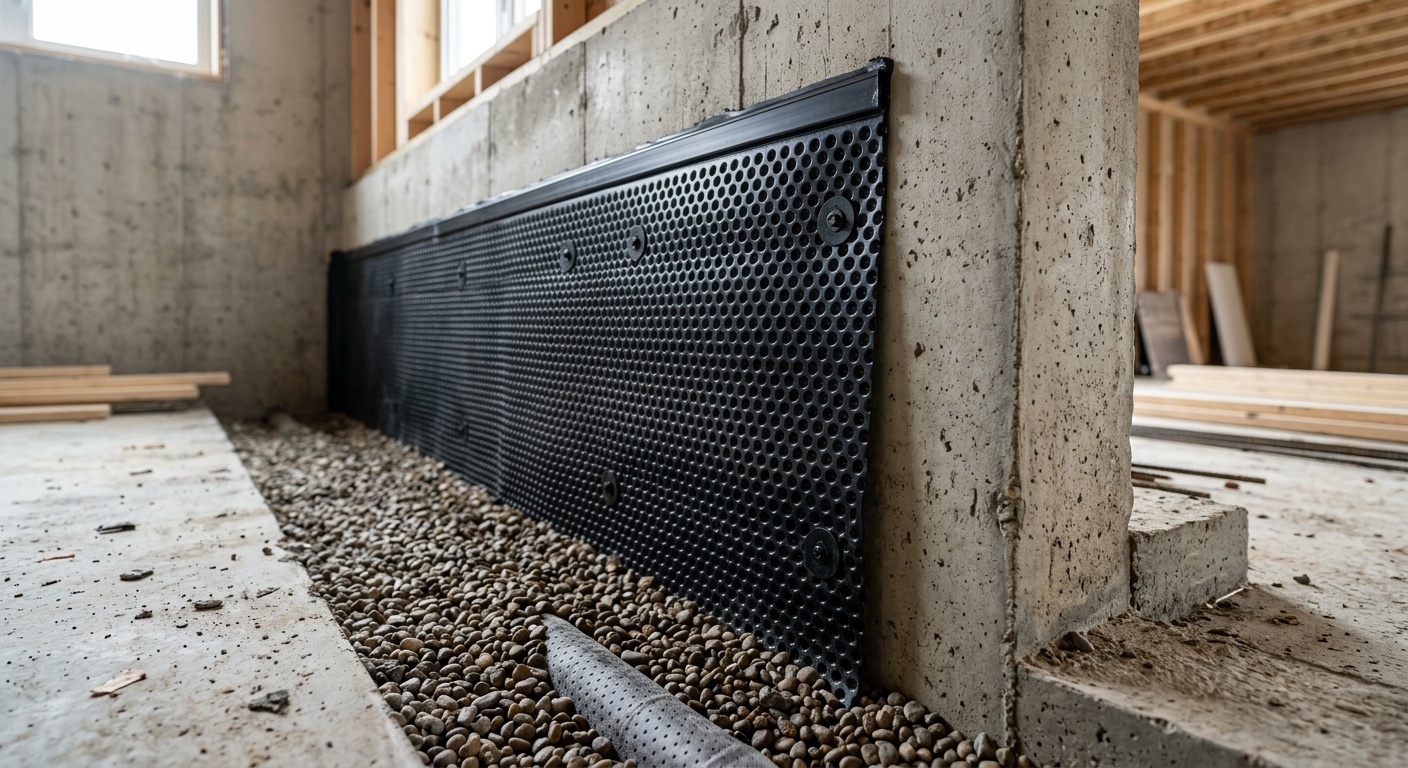
Minimalist Basement Waterproofing Solutions for a Zen-Inspired Home
Reading time: 9 minutes
Water doesn’t care about your aesthetic. It seeps through hairline cracks, pools in corners, and quietly undermines the calm, uncluttered sanctuary you’ve worked so hard to build downstairs. If you’ve invested in a minimalist, zen-inspired basement—think natural materials, clean lines, negative space—then discovering a musty smell or a damp wall can feel like a betrayal of everything that space represents.
Here’s the good news: waterproofing and minimalism aren’t opposing forces. In fact, the same philosophy that drives zen design—simplicity, intentionality, removing what doesn’t serve the space—applies beautifully to moisture control. Let’s walk through how to protect your basement without sacrificing the serenity you’ve curated.
Table of Contents
- Why Zen Basements Are Especially Vulnerable
- Understanding the Root Causes of Basement Moisture
- Minimalist Waterproofing Methods That Actually Work
- Comparing Waterproofing Approaches
- Case Studies: Real Homes, Real Fixes
- Common Challenges and How to Solve Them
- Frequently Asked Questions
- Your Roadmap Forward
Why Zen Basements Are Especially Vulnerable
Minimalist design often relies on natural, breathable materials—unfinished wood, limewashed plaster, woven jute rugs, exposed concrete floors treated with a matte sealer. These materials are gorgeous, but many of them are more porous and moisture-sensitive than the synthetic, heavily-treated materials found in conventional basement builds.
According to the 2026 National Association of Home Builders remodeling survey, basement moisture issues remain the top reported post-renovation complaint, affecting roughly 38% of finished basements within five years of completion. For zen-style basements specifically—where clutter-free shelving means fewer opportunities to hide a dehumidifier, and open floor plans mean water can travel further before anyone notices—early detection and prevention matter even more.
Well, here’s the straight talk: a beautiful, serene basement isn’t about achieving perfection on day one. It’s about designing a system where form and function are never in conflict.
Understanding the Root Causes of Basement Moisture
Before choosing any waterproofing method, you need to know what you’re actually fighting. There are typically three sources:
- Hydrostatic pressure — groundwater pushing against foundation walls from the outside, common in homes built on clay-heavy soil or in areas with high water tables.
- Condensation — warm, humid air meeting cool basement surfaces, especially in summer months. This is the quiet enemy of minimalist spaces because it doesn’t announce itself with a flood; it just slowly warps wood and grows mold behind drywall.
- Surface intrusion — poor grading, clogged gutters, or cracked window wells letting rainwater seep directly through walls or floors.
Dr. Elena Marsh, a structural engineer who consults on residential moisture control, put it simply during a 2026 industry panel: “Most homeowners treat waterproofing as a single event. It’s not. It’s an ongoing relationship between your home and the water table around it.” That mindset shift—from one-time fix to ongoing stewardship—is itself very zen.
Reading the Warning Signs Early
In a minimalist space, subtlety is the design goal, but it shouldn’t apply to your vigilance. Watch for:
- Faint white, powdery deposits (efflorescence) on concrete or stone surfaces
- A musty smell that returns even after cleaning
- Slight warping in wood shelving or minimalist furniture legs
- Condensation on windows or metal fixtures during humid months
Quick Scenario: Imagine you’ve just finished a serene reading nook in the corner of your basement—linen curtains, a low wooden bench, a single potted fern. Three months in, you notice the fern’s soil never seems to dry out, and the wall behind the bench feels cool to the touch. That’s condensation quietly building moisture load in an unventilated corner. Catching it now, before it becomes visible mold, is the difference between a $150 dehumidifier fix and a $4,000 remediation job.
Testing Before You Design
Before selecting finishes, run a simple 48-hour test: tape a small square of plastic sheeting to your bare foundation wall. If moisture collects on the inside of the plastic, you’re dealing with condensation. If the concrete itself feels damp underneath, you likely have hydrostatic pressure or surface intrusion—both requiring more aggressive exterior or drainage solutions before any interior design work begins.
Minimalist Waterproofing Methods That Actually Work
The goal is to solve the moisture problem invisibly, or with solutions elegant enough that they enhance rather than clutter the space.
1. Interior Sealants with Natural Finishes
Modern mineral-based waterproof coatings (silicate and siloxane sealers) can be applied to concrete floors and walls without leaving a plastic-looking sheen. They preserve the raw, textured look prized in wabi-sabi and zen aesthetics while blocking moisture penetration at a molecular level.
2. French Drains Disguised as Design Features
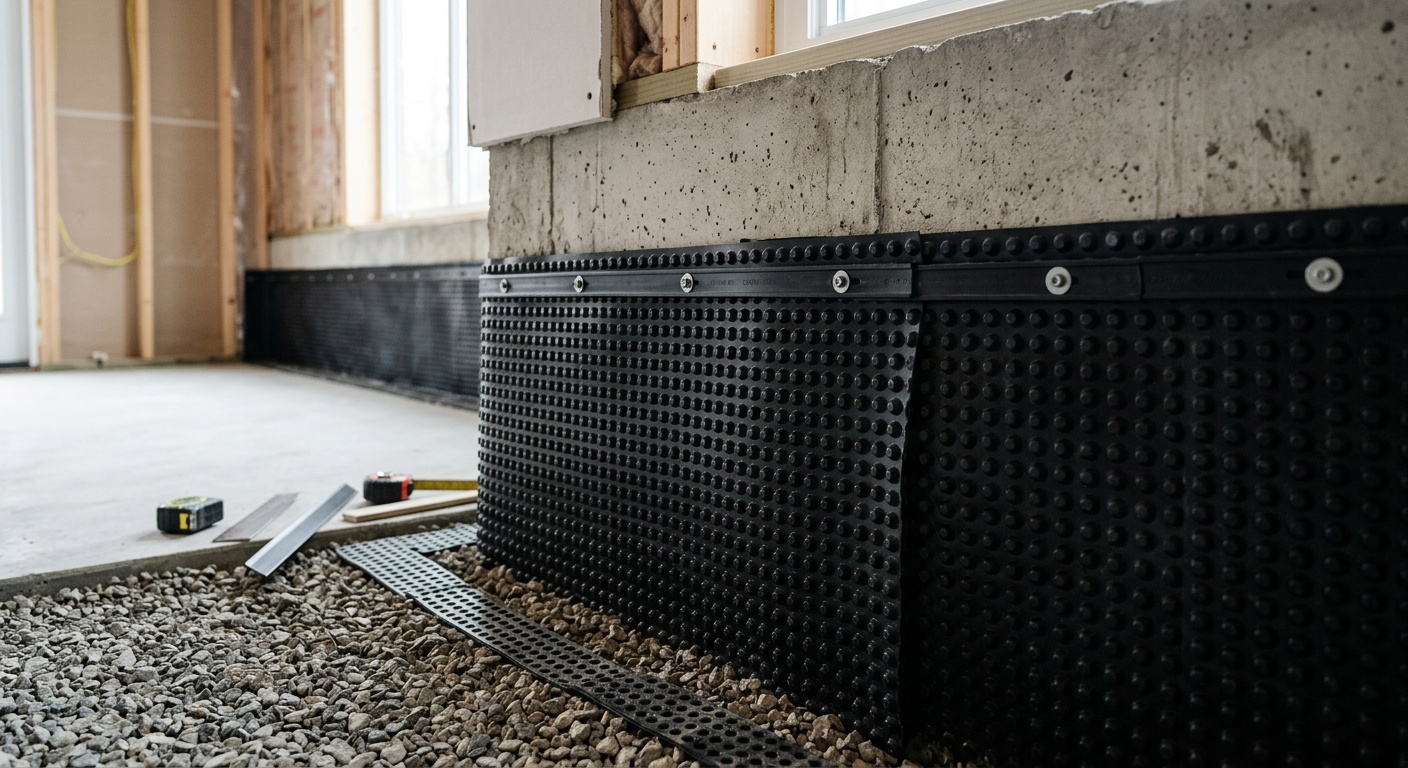
Interior French drain systems, once eyesores of exposed piping, can now be routed beneath a floating floor or hidden under a river-rock channel that doubles as a design element—think a dry creek bed running along the room’s perimeter, a classic zen garden motif repurposed functionally.
3. Smart, Quiet Dehumidification
Whole-room dehumidifiers have shrunk dramatically. 2026 models from brands like AprilAire and Santa Fe now run below 40 decibels—quieter than a whispered conversation—and can be tucked into a closet or built-in cabinet, maintaining both silence and unclutered sightlines.
4. Vapor Barriers Under Natural Flooring
If you love the look of stone tile, bamboo, or engineered wood in your basement, a 6-mil polyethylene vapor barrier beneath the subfloor is non-negotiable. It’s invisible once installed and prevents ground moisture from ever reaching your beautiful natural materials.
5. Exterior Grading and Gutter Discipline
Sometimes the most minimalist fix is entirely outside the house: extending downspouts six feet from the foundation and ensuring the ground slopes away from your home at a minimum of 6 inches over 10 feet. No design compromise required indoors at all.
Comparing Waterproofing Approaches
| Method | Avg. Cost (2026) | Aesthetic Impact | Longevity | Best For |
|---|---|---|---|---|
| Mineral Sealant Coating | $3–$6 per sq ft | Very Low (preserves texture) | 10–15 years | Condensation-prone walls |
| Interior French Drain | $45–$90 per linear ft | Low if disguised well | 25+ years | Hydrostatic pressure |
| Quiet Dehumidifier System | $1,200–$2,800 installed | None (hidden install) | 8–12 years | Humidity control |
| Vapor Barrier + Flooring | $4–$9 per sq ft | None (fully hidden) | 20+ years | New flooring installs |
| Exterior Grading/Gutters | $500–$2,000 total | None (outdoor only) | Ongoing maintenance | Surface water intrusion |
Effectiveness Ratings by Homeowner Survey (2026)
Case Studies: Real Homes, Real Fixes
Case 1: The Portland Reading Retreat. A couple in Portland, Oregon converted their basement into a minimalist meditation and reading space in early 2025—tatami-inspired flooring, low seating, a single bonsai tree. By winter, condensation had warped the tatami edges. The fix wasn’t ripping everything out; it was installing a discreet 35-decibel dehumidifier behind a shoji-style sliding panel and applying a breathable mineral sealant to the walls before reinstalling flooring. Total cost: $3,400. Result: zero moisture issues through the 2025–2026 winter season.
Case 2: The Denver Concrete Loft. A homeowner wanted exposed, polished concrete floors throughout a zen-inspired basement office. Soil tests revealed high hydrostatic pressure from spring snowmelt. Rather than compromise the concrete look, contractors installed an interior French drain routed to a sump pump hidden beneath a built-in bench—completely invisible, yet handling over 200 gallons of water diversion during peak spring runoff in 2026.
Case 3: The Budget-Conscious Fix in Ohio. Not every solution needs to be expensive. A homeowner noticed early efflorescence on an unfinished wall behind a planned yoga corner. Instead of major construction, they extended downspouts, regraded soil near the foundation, and added a $180 compact dehumidifier. Eighteen months later, the wall remains dry—proof that sometimes the simplest, most minimalist intervention truly is the most effective.
Common Challenges and How to Overcome Them
Challenge: Hiding Equipment Without Hiding Problems
Minimalist design tempts homeowners to conceal dehumidifiers and drains too well—to the point where maintenance gets forgotten. Pro Tip: build a simple quarterly reminder into your calendar to check filters and drain lines, even if the equipment is tucked behind a beautiful panel.
Challenge: Choosing Materials That Are Both Natural and Water-Resistant
True zen materials—raw wood, unglazed ceramics, natural fiber textiles—are often the most vulnerable to moisture. The solution isn’t abandoning these materials but treating them properly beforehand: marine-grade sealants on wood, water-resistant natural fiber blends for textiles, and elevated platforms (even an inch of airflow gap) beneath furniture touching concrete floors.
Challenge: Budget vs. Long-Term Value
It’s tempting to choose the cheapest fix, but a 2026 Remodeling Impact Report found that homes with professionally installed interior drainage systems recovered 68% of installation costs in resale value, compared to just 41% for surface-level sealant-only approaches. Ready to transform complexity into competitive advantage? Think of waterproofing not as a cost center, but as a foundational investment in your home’s long-term design integrity.
Frequently Asked Questions
Can I waterproof a basement without losing the minimalist aesthetic entirely?
Yes. Most modern waterproofing methods—mineral sealants, hidden French drains, quiet dehumidifiers—are designed to be invisible or blend into design features like stone channels and built-in cabinetry. The key is planning waterproofing before finalizing your design layout, not as an afterthought.
How often should a zen-inspired basement be inspected for moisture issues?
Twice yearly at minimum—once before summer humidity peaks and once before winter groundwater shifts. Given that minimalist spaces often have fewer visual cues (less furniture, fewer objects) to reveal early damage, a proactive inspection schedule is essential rather than optional.
What’s the single best first step if I’m on a tight budget?
Start outside, not inside. Extending downspouts and correcting soil grading around your foundation costs under $500 in most cases and addresses a significant percentage of basement moisture problems before you spend a dollar on interior fixes.
Your Roadmap Forward
Creating a dry, serene basement isn’t a one-time project—it’s an ongoing practice, much like the mindfulness principles that inspired your design in the first place. Here’s how to move forward with intention:
- Step 1: Run the 48-hour plastic-sheet moisture test to identify whether you’re dealing with condensation or hydrostatic pressure.
- Step 2: Address exterior grading and gutter extensions first—it’s the lowest-cost, highest-impact fix available.
- Step 3: Choose interior solutions that disappear into your design: mineral sealants, hidden drains, quiet dehumidifiers.
- Step 4: Build a seasonal inspection ritual into your calendar—treat it like tending a garden, not fixing a problem.
- Step 5: Reassess every 3–5 years as materials age and regional weather patterns shift, particularly as 2026’s increasingly volatile precipitation patterns continue affecting groundwater levels nationwide.
As sustainable building practices and biophilic design continue converging in 2026, expect waterproofing technology to become even more discreet, more breathable, and more compatible with natural materials than ever before. Your zen basement doesn’t have to choose between beauty and resilience—the two are becoming inseparable design principles.
So, what’s the first small step you’ll take this week toward a drier, calmer space below your home?